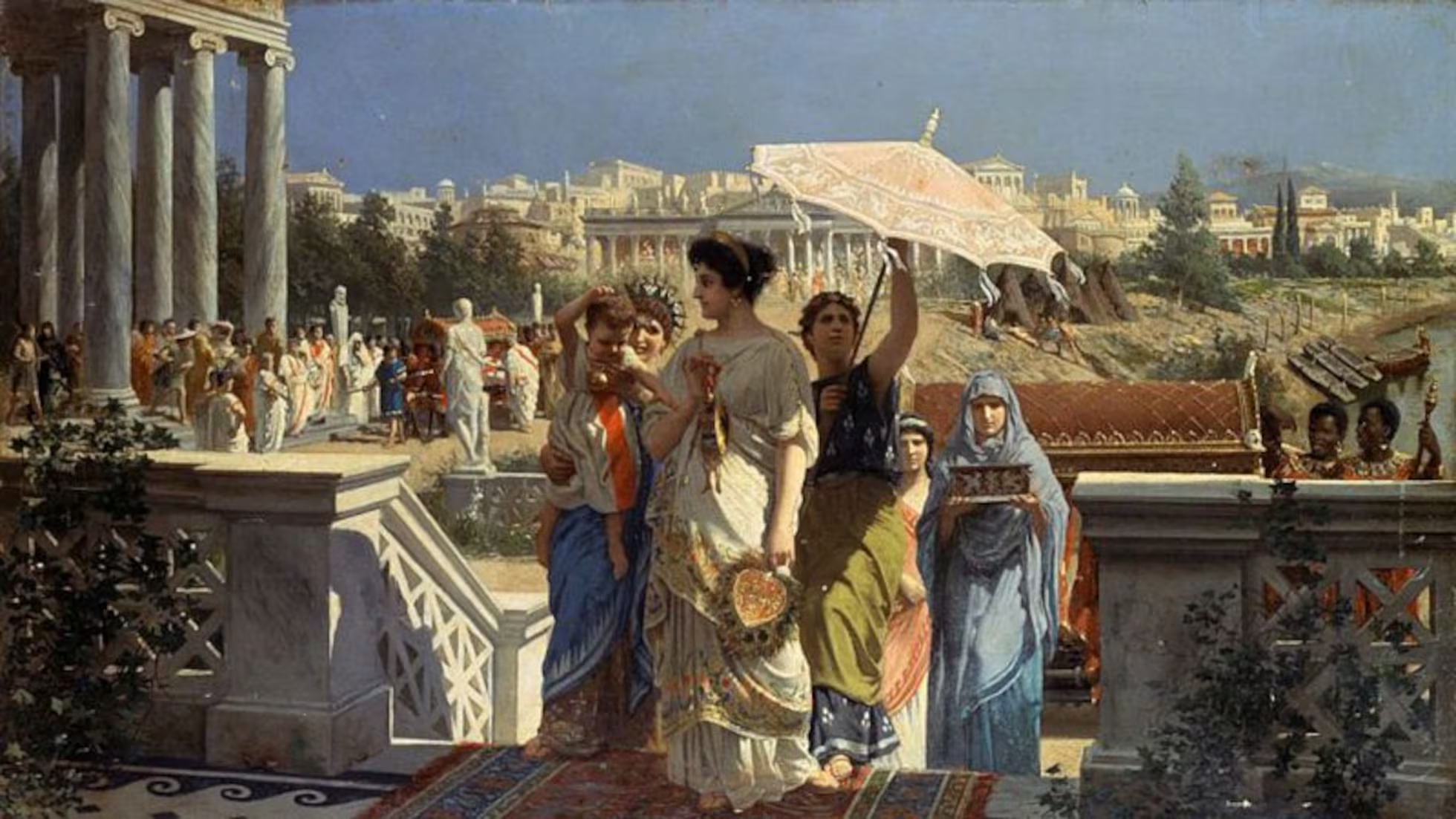
Travel Industry News from the Roman Empire Age – When people talk about the travel industry, most imagine modern airports, online bookings, and global tourism brands. But long before airplanes and digital tickets, the foundations of the travel industry were already being built. In fact, some of the earliest and most organized travel systems in history appeared during the era of the Roman Empire.
If we look closely at travel industry news from the Roman Empire age, we discover a surprisingly advanced system. Roads, inns, travel permits, guidebooks, and even early forms of tourism were already shaping how people moved across vast territories. For anyone interested in the history of travel, tourism evolution, or ancient infrastructure, the Roman Empire offers fascinating insight.
Let’s explore how travel worked in one of the most powerful civilizations in history.
The Roman Road Network: The Backbone of Ancient Travel
One of the biggest breakthroughs in ancient travel came from the Roman road system. The Romans constructed over 400,000 kilometers of roads across Europe, North Africa, and parts of the Middle East. These roads connected cities, military outposts, trade centers, and ports.
The famous phrase “All roads lead to Rome” was not just poetic language. It reflected the strategic design of the empire’s infrastructure. Roads were built straight whenever possible, paved with stone, and designed for durability. Many Roman roads are still visible today.
This road network changed travel completely. Before Rome’s expansion, journeys were slow, dangerous, and unpredictable. After the roads were established, travel became more structured. Soldiers, merchants, government officials, and ordinary citizens could move with greater speed and safety.
From a modern perspective, this was one of the earliest large-scale transportation systems supporting trade and tourism.
Government-Sponsored Travel: Cursus Publicus
The Roman Empire didn’t just build roads. It also created an official courier and transportation service known as the Cursus Publicus. Established during the reign of Augustus, this system allowed government officials to travel efficiently across the empire.
The Cursus Publicus provided horses, carriages, and resting stations placed at regular intervals along major routes. Authorized travelers carried official permits that granted them access to these facilities.
In today’s terms, this system functioned like a combination of a postal service and a government travel network. Messages, documents, and officials could move quickly between provinces and the capital in Rome.
While it was primarily for administrative use, its existence influenced the wider travel environment. Inns, service stations, and supply points developed along these routes, benefiting civilian travelers as well.
Inns and Accommodation in Ancient Rome
As travel increased, so did the need for accommodation. The Roman Empire had different types of inns and lodging facilities, depending on the traveler’s social status and budget.
Wealthy travelers often stayed in private villas or were hosted by influential families. However, ordinary merchants and travelers relied on inns called “mansiones” and “cauponae.”
Mansiones were official stopping points along major roads, often connected to the Cursus Publicus. They provided basic lodging, food, and stable facilities for horses. Cauponae were more like commercial inns and taverns. They offered meals, beds, and a place to rest, although their reputation was sometimes questionable.
Even in ancient times, travelers worried about safety, quality, and cost. Complaints about poor service, theft, or bad food were not uncommon. In many ways, these concerns sound very similar to modern travel reviews.
Religious Tourism and Pilgrimage
Travel during the Roman Empire was not only about politics or trade. Religion played a major role in movement across regions.
One of the most famous religious destinations was the city of Jerusalem. Pilgrims traveled long distances to visit sacred sites, attend festivals, and participate in rituals. As Christianity began to spread across the empire, travel to holy locations increased even more.
Temples dedicated to Roman gods also attracted visitors. People traveled to consult oracles, seek healing, or fulfill religious vows. Sanctuaries often developed local economies around visiting pilgrims.
This form of religious tourism significantly influenced regional development. Inns, food markets, souvenir sellers, and transport services thrived in cities known for spiritual importance. It was an early example of destination-based travel growth.
Leisure Travel Among the Roman Elite
While many traveled for duty or faith, the Roman elite traveled for pleasure. Wealthy citizens visited coastal resorts, countryside villas, and spa towns to relax.
One of the most popular leisure destinations was Pompeii before its destruction. Located near the Bay of Naples, it was known for its beautiful homes, bathhouses, theaters, and scenic views.
Another favored retreat area was around Naples, where aristocrats built luxurious villas. These locations offered mild climates, entertainment, and social gatherings.
Roman bath complexes also became attractions. Visiting grand public baths was not only about hygiene but also socializing and networking. In many ways, these experiences resembled modern resort culture.
Leisure travel helped shape a culture where travel was not just necessary but desirable. It marked an important shift toward tourism as a lifestyle choice.
Trade Routes and International Commerce
The Roman Empire connected Europe, Asia, and Africa through vast trade networks. Sea routes across the Mediterranean and land routes reaching into Asia allowed goods, ideas, and people to circulate widely.
Major ports like Alexandria served as international trade hubs. Merchants transported spices, silk, grain, precious metals, and luxury goods across continents.
This commercial activity stimulated travel demand. Merchants frequently journeyed between cities, negotiated deals, and established trade partnerships. Caravan routes extended toward the Silk Road, linking Rome indirectly with distant Asian markets.
From a travel industry perspective, trade routes were essential. They encouraged shipbuilding, harbor construction, navigation techniques, and cross-cultural exchange. These developments laid the groundwork for global travel patterns that would evolve centuries later.
Travel Risks and Safety Concerns
Despite the impressive infrastructure, travel in the Roman Empire was not entirely safe. Banditry, storms at sea, and political unrest posed real threats.
Travelers often joined caravans or groups for protection. Military patrols were stationed along certain roads, especially in unstable provinces. Sea travel, while faster in some cases, depended heavily on weather conditions.
Still, compared to many earlier civilizations, Rome offered relatively stable travel conditions during periods known as the Pax Romana. This era of relative peace allowed commerce and travel to flourish.
Safety improvements increased confidence among travelers, encouraging more movement across regions. Stability remains a key factor in tourism growth even today.
Early Travel Documentation and Guides
Interestingly, Romans also produced early forms of travel documentation. Itineraries listed routes, distances between towns, and stopping points. One example is the Antonine Itinerary, which mapped out road networks across the empire.
These documents functioned like ancient travel guides. They helped travelers estimate journey times and plan stops. While not tourism brochures in the modern sense, they show that structured travel planning already existed.
Travel permits were also required for certain routes, especially within official systems. This administrative approach reflects early regulation in the travel sector.
The Legacy of Roman Travel Infrastructure
The influence of Roman travel systems did not disappear with the fall of the empire. Many medieval roads followed Roman routes. Cities that flourished due to Roman trade and travel remained important centers for centuries.
The idea of standardized roads, roadside services, official courier systems, and destination-based economies can all trace roots back to Roman innovation.
For anyone studying travel industry history, the Roman Empire represents a major turning point. It demonstrates how infrastructure, security, religion, commerce, and leisure combined to create an interconnected world long before modern technology.
Travel industry news from the Roman Empire age may not have appeared in newspapers or online portals, but the developments of that era were revolutionary. Roads united continents, inns supported mobility, religious sites attracted pilgrims, and luxury resorts entertained the elite.