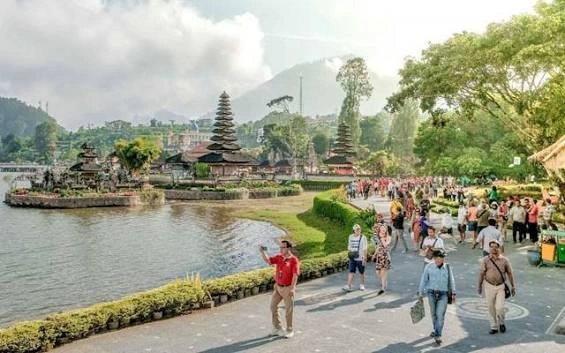
Indonesia: The Developing Country Offering Luxury Travel on a Budget for Wealthy Tourists
Indonesia: The Developing Country Offering Luxury Travel on a Budget for Wealthy Tourists | Indonesia is often described as a developing country with a rapidly growing economy and a diverse cultural landscape. Yet, for international travelers from wealthier nations, the country can offer something that feels surprisingly luxurious: high-end experiences at relatively affordable prices.
From private villas and beachfront resorts to fine dining and personalized services, Indonesia has become an attractive destination for travelers who want luxury without paying the prices commonly found in developed countries.
Affordable Luxury in Indonesia
One of Indonesia’s biggest advantages is its ability to offer luxury experiences at competitive prices.
A traveler with a substantial budget can often access private villas, premium resorts, spa treatments, private transportation, and exclusive activities for less than comparable experiences in major destinations in Europe, North America, or Australia.
This price difference is one of the reasons Indonesia continues to attract international tourists looking for value.
The experience can feel particularly attractive to wealthy travelers who are accustomed to paying significantly more for luxury services in their home countries.
Why Indonesia Can Be So Affordable
Several factors contribute to Indonesia’s relatively affordable travel costs.
Labor costs are generally lower than in many developed economies, which can make hospitality services, transportation, dining, and personal assistance more affordable for visitors with foreign currencies.
Indonesia also has a highly competitive tourism industry. From budget accommodation to five-star resorts, businesses compete to attract visitors with different spending levels.
This creates an unusual situation where travelers can enjoy premium services without necessarily spending the same amount they would in wealthier countries.
Bali and the Luxury Tourism Market
is perhaps the most recognizable example of Indonesia’s luxury tourism industry.
The island offers an extensive range of high-end accommodations, including private villas with swimming pools, luxury resorts, boutique hotels, and exclusive retreats.
Areas such as Ubud, Seminyak, Canggu, and Uluwatu have developed different luxury tourism identities. Travelers can choose between wellness retreats, beachfront properties, cultural experiences, fine dining, and private excursions.
For international visitors with strong purchasing power, these experiences can provide an attractive balance between luxury and cost.
Luxury Does Not Always Mean Expensive
In many developed countries, luxury often comes with a premium price tag. A private pool, personal driver, spa treatment, or high-end restaurant experience can quickly become expensive.
Indonesia offers a different equation.
A traveler who spends carefully can combine several premium experiences within a single trip while maintaining a budget that might only cover a limited number of luxury activities elsewhere.
This does not mean that everything in Indonesia is cheap. Indonesia also has extremely expensive hotels, restaurants, private tours, and exclusive experiences.
The difference is that the country offers a particularly wide range of luxury options at different price points.
The Advantage of Foreign Purchasing Power
Currency exchange rates can further increase the purchasing power of visitors from wealthier countries.
For tourists earning salaries in currencies such as the US dollar, Australian dollar, British pound, or euro, everyday expenses in Indonesia can sometimes appear relatively inexpensive.
This creates an interesting economic dynamic. A service that may be considered premium within Indonesia can still appear affordable to an international visitor.
For the traveler, this can mean more comfort and convenience. For local businesses, international tourism creates an important source of revenue and employment.
Beyond Bali
Although Bali dominates discussions about Indonesian tourism, luxury travel opportunities extend far beyond the island.
Destinations such as , Lombok, Labuan Bajo, Yogyakarta, and parts of Indonesia’s eastern islands offer different forms of premium travel.
Travelers can explore cultural attractions, tropical beaches, diving destinations, mountains, traditional villages, and culinary experiences while staying at properties designed for the luxury market.
Indonesia’s geographical diversity gives wealthy tourists many ways to spend their money beyond the country’s most famous destination.
A Complicated Relationship With Tourism
The idea of Indonesia as a destination where wealthy foreigners can enjoy luxury cheaply also raises important questions.
Tourism can generate jobs, support small businesses, encourage infrastructure development, and bring international spending into local economies.
However, rapid tourism development can also create challenges. Popular destinations may face congestion, environmental pressure, rising property prices, waste management problems, and concerns about whether local communities receive enough economic benefits.
The affordability that attracts international tourists can therefore have complicated consequences for residents.
Is Cheap Luxury Always a Good Thing?
From a tourist’s perspective, affordable luxury is obviously attractive. But the concept deserves a broader discussion.
If international visitors can enjoy premium services at very low prices, part of that affordability may be connected to lower local wages and differences in purchasing power.
Responsible tourism should therefore go beyond simply finding the cheapest possible experience.
Choosing locally owned businesses, respecting communities, reducing environmental impact, and paying fair prices can help ensure that tourism benefits more people.
Indonesia’s Opportunity in Global Tourism
Indonesia has an opportunity to position itself as a destination where travelers can experience high-quality hospitality without the extreme costs associated with some developed tourist markets.
Its combination of natural beauty, cultural diversity, hospitality, food, and competitive pricing gives the country a powerful advantage.
The challenge is ensuring that tourism growth remains sustainable and that the benefits are distributed fairly.
If Indonesia can balance affordability with environmental protection, worker welfare, and community development, its tourism industry can continue to grow without sacrificing the qualities that make the country attractive in the first place.
Indonesia’s reputation as an affordable luxury destination highlights an unusual feature of international tourism: wealthy travelers can sometimes enjoy a much higher standard of travel for their money in a developing country than they can in their own countries.
Private villas, premium resorts, fine dining, wellness experiences, and personalized services can all be accessible at comparatively competitive prices.
However, the real challenge is not simply making Indonesia cheaper for foreign visitors. The long-term goal should be creating a tourism industry where international travelers receive excellent value while local workers, communities, and the environment also benefit.
That balance could determine whether Indonesia remains one of the world’s most attractive destinations for affordable luxury in the years ahead.
Hot News!
Terapkan trik menang game online Anda saat meracik angka jitu situs toto di Togel178.
Recent Posts
- Why Travel Shikoku Feels Like a Different Japan
- Indonesia: The Developing Country Offering Luxury Travel on a Budget for Wealthy Tourists
- Supporting Manggarai Flores: How Tourism Can Help Local Communities Recover
- Exploring the Development of Travel and Tourism in Zimbabwe in 2026
- Planning a Trip to Reo, Manggarai: A Journey Through Flores